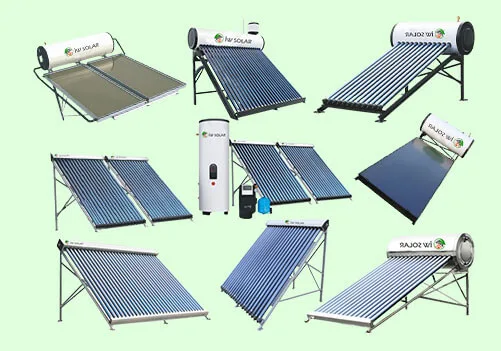
Quick Comparison: Which Type Fits Your Market?
| Type | Pressure | Relative cost | Best climate | Typical buyers |
|---|
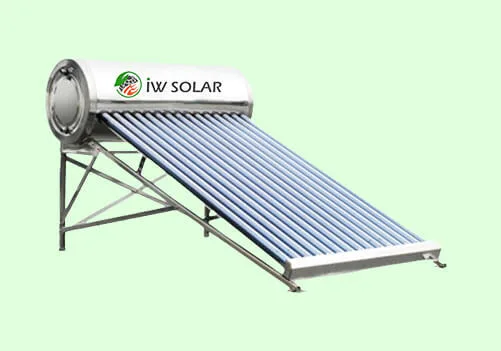
| Non-pressurized | None (gravity) | $ | Warm, frost-free | Mexico, Africa, SE Asia retailers |
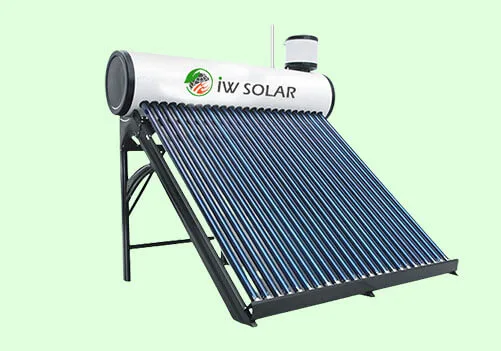
| Integrative high-pressure | Mains | $$ | Most climates | Hotels, homes, distributors |
| Split pressurized | Mains | $$$ | Frost-prone | Projects, engineered installs |
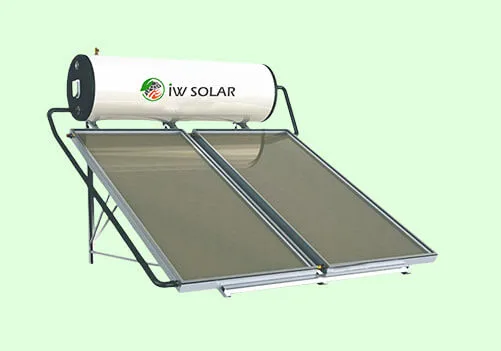
| Flat panel | Mains (loop) | $$ | Mild to cold | Mexico, Mediterranean |
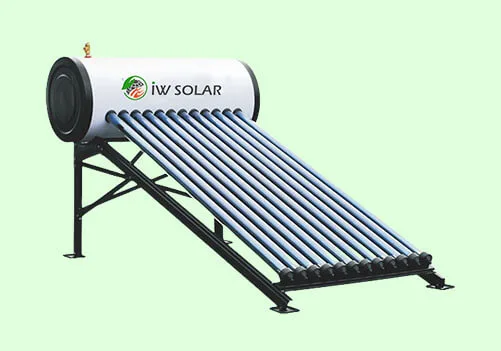
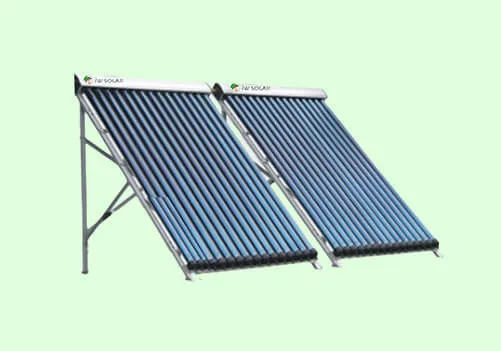
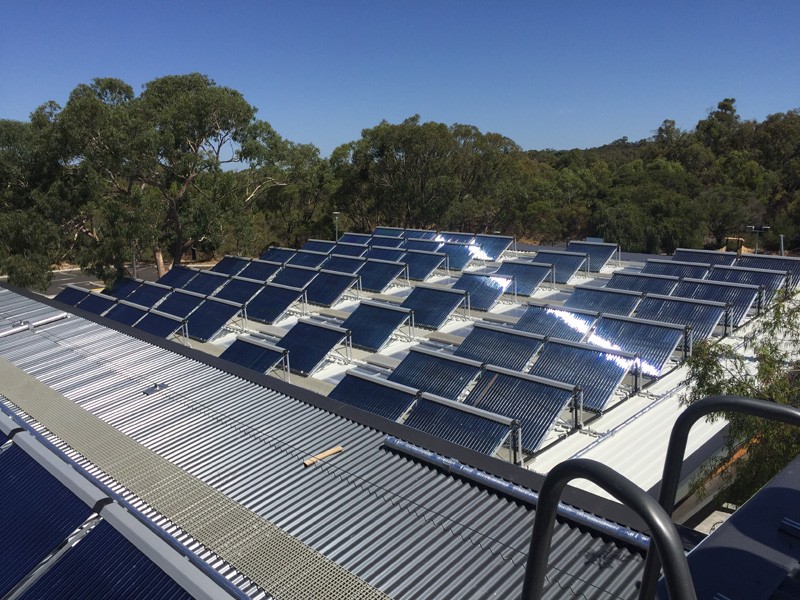
| Heat pipe collector | Mains (loop) | $$$ | Cold, high latitude | Commercial projects |
| Copper coil integrative | Mains (coil) | $$ | Most climates | Hard-water regions |
How to Choose the Right Type for Your Business
- Climate first: frost-free markets can start with non-pressurized; anywhere with freezing nights should move to heat pipe, flat panel with glycol, or a pressurized system.
- Water quality: hard or sandy water favors copper coil and indirect designs that protect the storage tank.
- Roof and installation: integrative units install in one lift; split systems need plumbing between roof and tank.
- Quality checks: whatever the type, insist on full-process inspection — at iW Solar every order ships under AQL 2.5 sampling, and third-party inspection is always welcome.
- After-sales: pick a factory that stocks spare tubes, tanks, and brackets — for example our solar water heater brackets.
Frequently Asked Questions
Which type of solar water heater is best?
There is no single “best” — there is best-for-your-market. Warm regions get the fastest payback from non-pressurized systems; cold regions need heat pipe or pressurized systems; design-driven markets prefer flat panels. Match the type to climate and budget, then choose the supplier, not just the model.
What is the difference between pressurized and non-pressurized?
A non-pressurized system is open to the atmosphere and delivers hot water by gravity, which keeps costs low. A pressurized system is a sealed vessel fed by mains pressure, giving strong showers on every floor at a higher price.
Which solar water heater works in cold climates?
Heat pipe collectors and split pressurized systems perform best in cold weather, because the vacuum insulation and indirect heat transfer keep working even when temperatures drop below zero.
How long does a solar water heater last?
A well-built system lasts 15–20 years. The weak points are usually the tank welding and the absorber coating, which is why iW Solar backs its tanks with a 3-year warranty and inspects every order to AQL 2.5.
What is the MOQ and delivery time for bulk orders?
At iW Solar the minimum order is 1 set, quotes come back within 12 hours, and standard delivery is 18–25 working days. OEM branding with your logo and packaging is available.
Get a Factory Quote for Any Type
Choosing between the types of solar water heaters is easier with factory numbers in hand. Send us your market and monthly volume, and our engineers will recommend the right type and configuration — with a quotation within 12 hours.
Buying for South Africa? See our dedicated market page: solar water heaters for South Africa (solar geysers) — high-pressure and non-pressurized geysers, flat plate options for frost-prone inland regions, and container shipping to Durban.
Buying for East Africa? See our dedicated market pages: solar water heaters for Kenya (EPRA-compliance projects, shipping to Mombasa) and solar water heaters for Tanzania (hotels and lodges, shipping to Dar es Salaam).
Buying for West Africa? See our dedicated market page: solar water heaters for Nigeria (Africa’s largest market, estates and hotels, shipping to Lagos).